[08. Far-sighted
It is packaging that establishes a responsible relationship with its own future.
Packaging is capable of acting today with awareness of its potential future impact. The choices that shape today’s packaging cannot be driven by immediate advantage alone, but must take into account the consequences that may follow.
Rethinking smartness in packaging: from the object to supply chain intelligence

In recent years, packaging has found itself at the center of profound transformations, intertwined with increasingly evident environmental crises, growing geopolitical tensions, a progressive redefinition of economic models, and the acceleration of technological innovation.
Alongside an overall scenario of increasing uncertainty, the European regulatory framework no longer intervenes solely to correct the most evident effects of established practices, but instead pushes for a reconsideration of assumptions, priorities, and decision-making approaches that have long remained implicit. In this context, the PPWR acts as an interpretative lens, making visible the consequences of design choices across time and space. It directs attention to what is being done, to how decisions are made, to the actors involved, and to the distribution of responsibilities, costs, and benefits within complex systems.
Continuing to reason in terms of isolated optimizations or specific, punctual responses therefore proves insufficient to address the complexity at stake. Packaging can no longer be regarded as a neutral element or merely a functional support, but rather as an artifact capable of shaping production practices, market logics, and patterns of use, with repercussions that affect the environment, social contexts, and territories.
Within the context of ongoing transformations, language becomes a particularly sensitive indicator of the sector’s vulnerabilities. Certain terms such as innovation, circularity, and sustainability continue to be used as if they were still capable of guiding thought and action, while in reality they empty these concepts of meaning and trivialize their scope.
“Smart” falls within this same logic. A term originally intended to describe an emergent quality, linked to the capacity for adaptation and responsiveness to complexity, has over time turned into a generic label, used as a slogan to accompany very different solutions, without truly questioning their meaning or their consequences.
The issue is not only semantic, but above all cultural. When a word is employed in an extensive and undifferentiated way, it ultimately loses its critical capacity to guide design choices and the responsibilities that derive from them.
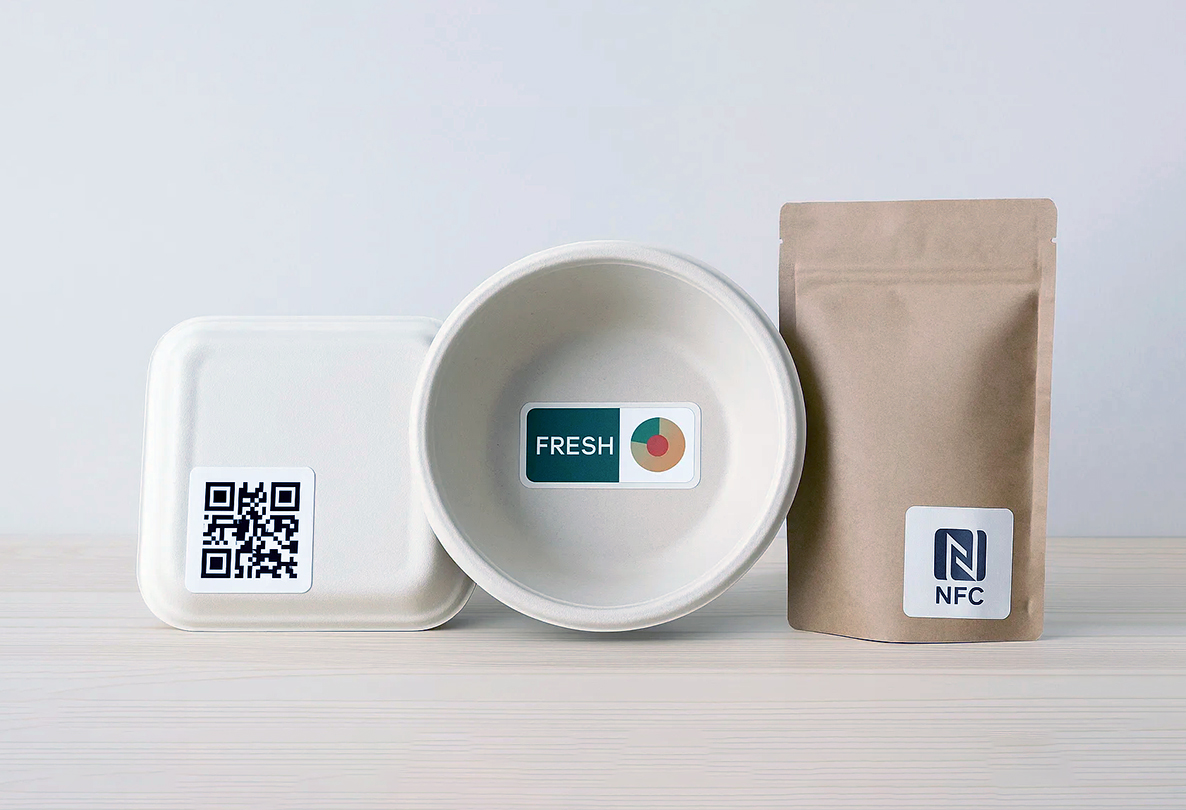
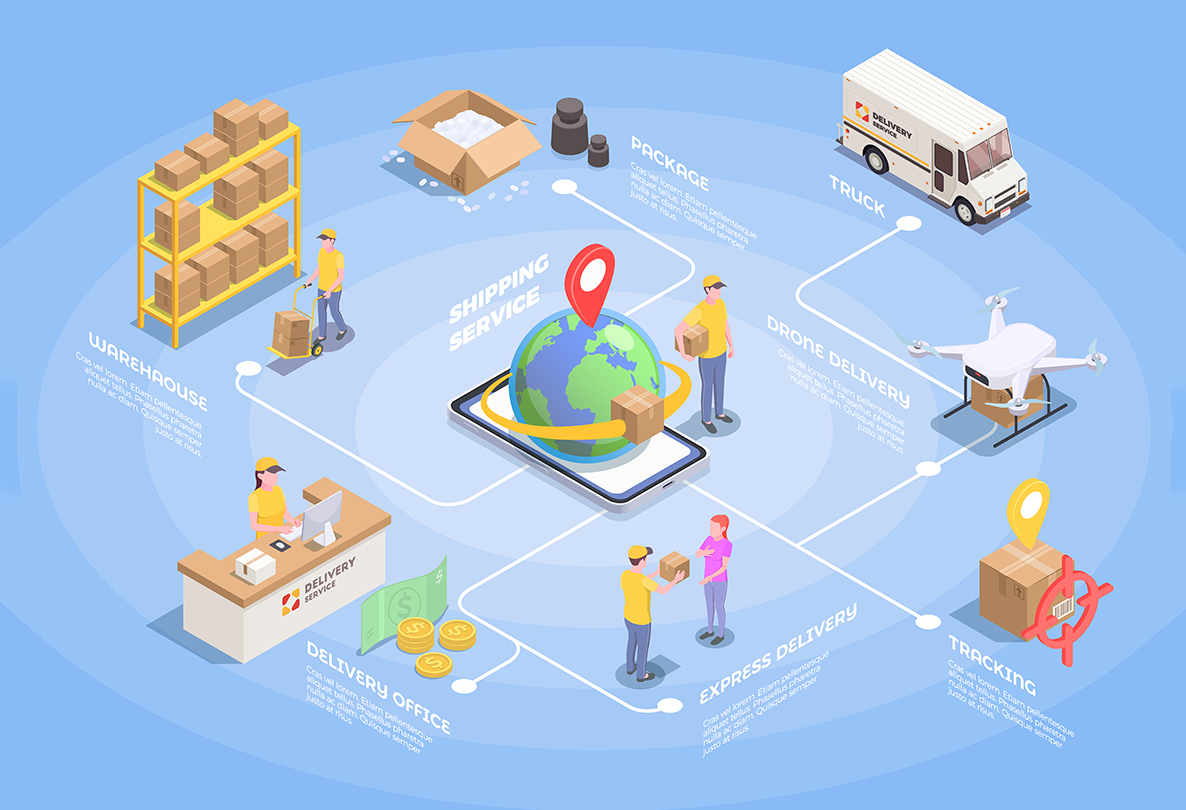
In a regulatory context that calls for systemic coherence and a long-term perspective, a simplistic use of the term “smart” shifts attention toward visible performance features or the most immediately communicable aspects, leaving in the background a more relevant question: what kind of intelligence is actually enabled by packaging, which decisions it facilitates, and which relationships it helps to build or weaken within the system in which it operates.
Rethinking “smartness” in packaging therefore becomes a necessary step and entails a shift in the center of gravity of the discussion: from the performance of the object to the quality of the approach that generates it. In this perspective, intelligence takes the form of a design posture that is embodied in choices, priority criteria, and implicit assumptions that guide the project even before it materializes and makes its consequences visible.
Smartness is thus no longer limited to the most visible innovations and begins to be measured against the overall coherence of the project. It becomes the ability to hold together objectives that are often in tension, to recognize side effects, and to acknowledge that every decision concerning packaging produces consequences that extend beyond the immediate perimeter of the design intervention, often in a deferred manner over time.
It is at this juncture that smartness ceases to be an attribute of the object and takes shape as a form of distributed responsibility, embedded in the processes through which the system makes decisions and acts. Intelligence is expressed at the supply chain level, through the ways in which packaging is conceived, produced, distributed, and accompanied in the management of its outcomes over time. Packaging operates as a node within an articulated system, connecting actors, decisions, and responsibilities that function across different scales.
Every package reflects a balance, at times unstable, between forces that do not act simultaneously nor in alignment. The qualities attributed to it are the result of interlinked decisions, taken at different moments and by different actors along the supply chain, each with specific margins of choice and levels of responsibility.
The system’s ability to anticipate consequences, reduce asymmetries, and manage interdependencies across the entire supply chain thus becomes crucial.
Through the way it is designed, packaging can enable, thanks to the integration of design choices and the use of data, coordination, anticipation, and exchange among the actors involved, thereby helping to create the conditions for intelligence to emerge at the supply chain level as the outcome of a distributed and cumulative process built over time.
Packaging takes on an active role in the dynamics it helps to structure. Through its material, informational, and symbolic configurations, it shapes behaviors, enables or hinders practices, makes certain actions more accessible and others more complex. It often operates quietly, yet it concretely participates in the distribution of operational possibilities and responsibilities throughout the system.
Packaging expresses a form of design “agency,” understood as the capacity to structure possibilities for action and to influence modes of decision-making.
It does not decide autonomously, but it shapes the way choices are exercised by those who design, produce, use, and manage packaging over time. Every design choice inscribes within the packaging a certain idea of use, value, and relationship with its surrounding context, contributing to making some effects foreseeable while leaving others in the background.
Recognizing this agency as an integral part of the project implies a shift in perspective. The evaluation of a packaging solution concerns the way it enables different actors to act, both today and over time.
Packaging operates as an ethical mediator: it translates upstream decisions into downstream consequences, making the responsibilities that run throughout its entire lifecycle more or less visible, and therefore more or less foreseeable.
Fully embracing this logic makes it clear that every packaging solution activates a multiplicity of impacts. Choices affect the operational practices and organizational logics of producers and converters, the usage behaviors of individuals, the relationships with the social contexts in which packaging circulates and is interpreted, and the environmental and territorial balances it contributes to reshaping. Within this framework, intelligence concerns the ability to govern these interactions over time, preventing responses to circumscribed problems from generating critical effects elsewhere in the system.
It is here that responsibility takes on a fully design-oriented and systemic form. Every simplification, every choice left in the background, every unaddressed ambiguity translates into a cost that is shifted onto other actors, often less visible or less equipped to manage it. Intelligent packaging recognizes this dynamic and works to make the consequences of choices legible and foreseeable, distributing the burden of action more consciously along the supply chain.
The ability to make the consequences of choices foreseeable and assumable represents the point at which packaging design concretely meets the domain of ethics.
[ Acknowledgements. Study conducted within the project “1.01 FuturE-Pack. Digital Advanced Design for the Enhancement of Packaging as a ‘Broadcaster’ in the Made in Italy Supply Chain”, within the Extended Partnership MICS (Made in Italy Circolare e Sostenibile), funded by the European Union – NextGenerationEU (National Recovery and Resilience Plan (NRRP) – Mission 4 Component 2, Investment 1.3 – D.D. 1551.11-10-2022, PE00000004). The views and opinions expressed are however solely those of the authors and do not necessarily reflect those of the European Union or the European Commission. Neither the European Union nor the European Commission can be held responsible for them.
[ Disclaimer. Non-commercial article disseminated solely for the purposes of information, criticism, or teaching. All trademarks mentioned belong to their rightful owners; rights relating to product names, trade names, and product images are the property of their respective holders.
[ Fonte immagini https://www.freepik.com/